
Golden Hour Wedding Photos: Reserve a 30–45 Minute Barn Portrait Slot

Yes, golden hour is the portrait window you should protect on your wedding day, and the fix is simple: check sunset for your date, then lock a fixed clock time for portraits. This soft, warm light flatters every skin tone and softens shadows in a way no filter can match. Look up your sunset time, then book a 30 to 45 minute portrait slot either during an earlier first look or as a brief escape from reception.
TL;DR:
The richest light usually falls 40 to 15 minutes before sunset, but nearby hills, trees, or buildings can block it earlier than a calculator predicts.
A first look typically takes 15 to 20 minutes; pairing it with formal portraits can preserve a 20 to 30 minute couple session during reception.
Without a first look, schedule the ceremony and family portraits early enough to reserve the 30 to 45 minutes before sunset for couple portraits.
Light cloud can soften and extend usable light, while storms call for a covered backup location and a photographer prepared to use flash.
The science of golden hour and why timing matters
Golden hour happens because sunlight travels through more atmosphere when the sun sits low on the horizon. That longer path scatters shorter blue wavelengths away, a process photographers often call Rayleigh scattering, and leaves the warm orange and red tones that make portraits glow. The result is also lower contrast than midday sun, which means fewer harsh shadows under eyes and chins, according to Frame & Focal’s guide to golden-hour photography.
How long that window lasts depends on more than the clock. Solar elevation changes faster near the equator and more slowly at higher latitudes, which stretches or compresses the usable light. Local topography matters just as much: a ridge line, tree stand, or barn roofline can cut the sun short well before the official sunset time listed online.
A few things shape your actual window on the day:
Season and latitude determine how quickly the sun drops and how long the warm light lingers.
Hills, trees, or buildings near your portrait spot can block direct light earlier than expected.
Clear versus hazy skies change how warm and saturated the light appears.
Treating “an hour before sunset” as a loose guideline rather than a guarantee is wise. A site walkthrough and a sunset calculator for your exact date give a far more reliable picture than a general rule.
Why golden-hour light flatters wedding portraits
The physics translates into real, visible benefits. Soft, wrap-around light fills in shadows evenly, which smooths skin tones and minimizes the kind of harsh midday shadows that can age a portrait or create awkward squinting. Because the light comes from a low angle, it also creates backlighting and rim light: a glowing edge around hair, a veil that seems to catch fire in a gentle breeze, and silhouettes that read as pure romance against the sky.
Weather and altitude shift the mood too. Light cloud cover diffuses the sun even further, while clear, dry air at higher elevations tends to produce crisper, more saturated color.
A few creative payoffs to watch for:
Hair and veils pick up a visible glow when backlit.
Shadows soften across the face, flattering most skin tones.
Silhouettes against the horizon create simple, timeless portraits.
Pro Tip: Ask your photographer to shoot a few frames facing directly into the light for rim glow, then a few with the sun at your backs for even, soft coverage on faces.
When golden hour happens and how long it lasts for your date
A useful starting rule: begin portraits roughly 30 to 45 minutes before sunset, with the richest light typically falling between 40 and 15 minutes before the sun dips below the horizon. That prime window is short, which is exactly why a fixed clock time matters more than a vague plan to “step outside before dark.”
Three tools make this concrete:
PhotoPills maps the sun’s path and shows exactly where it will sit relative to your venue at any time.
TimeandDate’s sunrise and sunset calculator gives precise times for your specific location and date.
A site walkthrough at the same time of day you plan to shoot reveals whether a ridge, roofline, or tree line will block the sun earlier than the listed sunset time.
Season changes the math substantially. A 5 PM portrait slot in June and a 5 PM slot in November can mean completely different lighting, since sunset itself moves by hours across the year and golden hour’s duration and color temperature shift with it, generally averaging somewhere in the 35 to 48 minute range depending on latitude, according to LightCast’s explanation of golden-hour science. Pulling the exact sunset time for your wedding date, rather than assuming it matches a wedding you attended in a different month, avoids a scheduling surprise.
How to build your wedding-day timeline to guarantee golden-hour photos

The biggest scheduling decision is whether to do a first look. A first look, typically 15 to 20 minutes, paired with 30 to 45 minutes for couple and wedding party portraits, lets you shoot most formal images earlier in the day, which frees up golden hour for romantic, just-the-two-of-you shots and protects your cocktail hour, according to Griffin Creative Co.'s wedding timeline guide. Skipping the first look means all portraits, including family and wedding party shots, compete for time in that same narrow golden-hour slot.
Two simple timeline skeletons, built around sunset time:
First-look day: Ceremony happens well before sunset, cocktail hour runs on schedule, and a 20 to 30 minute couple’s portrait slot is pulled from reception right at your fixed golden-hour time.
No-first-look day: Ceremony and family portraits are scheduled so the couple’s formal portraits land in the 30 to 45 minute window before sunset, with cocktail hour absorbing any overlap.
Hand your planner and photographer a short checklist so nobody has to make a judgment call in the moment:
A fixed clock time for the portrait block, written on the timeline itself.
A named point person, whether that’s the planner or a bridal party member, who physically fetches the couple at that time.
An agreed walking time from reception space to the portrait location, factored into the schedule.
A clear note that this slot does not move for toasts, speeches, or anything else running long.
Pro Tip: Build a five-minute buffer into the walk to your portrait spot. It’s cheap insurance against losing light to a delayed toast or a guest who wants one more photo.
Shooting and location tips couples should discuss with their photographer
Where you stand matters as much as when you shoot. Open, west-facing viewpoints give the cleanest shot at direct backlight, while a tree line nearby offers dappled, patterned light for variety. Ask your photographer to walk the property in advance and flag two or three spots with unobstructed sightlines to the horizon.
Movement reads beautifully in low, directional light. Walking shots, a slow turn into an embrace, or simply letting a veil catch the breeze all photograph well because the light is soft enough to forgive motion blur and flattering enough to catch every edge.
A few practical notes worth raising with your photographer and stylist:
Tiny, busy patterns in clothing can create a distracting moire effect in photos; solid colors and simple textures tend to hold up better.
Flowy, lightweight fabrics catch movement and breeze in a way that reads as romantic rather than stiff.
Shoes suited to the actual terrain, whether that’s grass, gravel, or a barn floor, keep portraits looking natural instead of careful.
Camera, lens and exposure basics to confirm with your photographer
You don’t need to understand every setting, but knowing the basics helps you ask sharper questions. Many photographers reach for focal lengths around 85mm for portraits because that length flatters facial proportions, while an ultra-wide lens used too close can distort features, something worth avoiding in formal portraits.
At golden hour, exposure shifts quickly as the sun drops, so photographers typically shoot in manual mode and in RAW format to preserve detail and correct white balance later if needed. White balance itself often sits around 3,800 to 4,100K to capture that warm glow accurately rather than letting a camera’s auto setting cool it down.
Backup plans are worth confirming ahead of time:
A reflector can bounce extra light onto faces if clouds roll in unexpectedly.
Off-camera flash gives photographers a way to maintain separation and exposure if the schedule slips past the ideal window.
A brief, agreed plan for what happens if the portrait slot gets pushed later than planned keeps everyone calm in the moment.
Blue hour and afterglow: the bonus window after sunset
Once the sun dips fully below the horizon, blue hour takes over: cooler, even light that works beautifully for venue exteriors and moodier, ambient-lit portraits, according to LightCast’s golden-hour science breakdown. It’s a natural follow-up to golden hour rather than a replacement for it.
Sequencing a short blue-hour block right after your golden-hour portraits, often with off-camera flash to light faces against that cool backdrop, gives you a second distinct look from the same evening. For venues with striking architecture or landscaping, blue hour can sometimes outshine golden hour as the more dramatic creative choice, a comparison worth exploring in this breakdown of golden hour versus blue hour.
How couples should plan golden-hour portraits at Mountain View Menagerie
Confirming sun path and walking times on your actual wedding date makes a real difference, and we recommend pinning down both during a site visit. Our mountain views and the choice between indoor and outdoor ceremony spaces give you flexibility to plan a portrait location that works with the light on your specific date rather than fighting it.
Walk your intended portrait spot at the same time of day you’ll actually be shooting, confirm the walking distance from your reception area, and get that exact clock time written into your timeline. From there, viewing our gallery and scheduling a tour lets you see how the light moves across the property before your date arrives.
Tips for dealing with unpredictable weather or cloud cover during golden hour
Cloud cover doesn’t ruin golden hour, it changes it. A light, even layer of clouds often works as a natural diffuser, softening the light further and extending the flattering window slightly longer than a perfectly clear sky would allow.
Heavier cloud cover or an unexpected storm front calls for flexibility rather than panic. Building a backup indoor or covered location into your timeline in advance means you’re not scrambling to find shelter if the sky turns. Ask your photographer ahead of time how they’d adapt their plan, whether that means leaning on off-camera flash and a reflector, or shifting the portrait block slightly earlier to catch any available light before conditions worsen.
A few practical habits help:
Check a short-range forecast the morning of the wedding, not just the week before.
Keep a covered backup spot in mind so a sudden shower doesn’t eliminate your portrait window entirely.
Trust your photographer’s read of the sky in the moment: experienced photographers often adjust angles and settings on the fly rather than waiting out a brief overcast patch.
A barn venue offers a natural advantage here, since covered outdoor spaces and interior settings with good window light can both serve as fallback portrait locations without losing the romantic feel of the day.
Examples of creative golden hour photo poses and use of natural elements unique to a barn venue
A barn setting brings textures and structures that open urban or ballroom venues simply don’t have. Weathered wood, open barn doors, and sweeping fields all give a photographer natural framing options that pair beautifully with golden light.
A few pose ideas worth discussing with your photographer:
A slow walk through an open field with the sun low behind you, which creates a soft silhouette and catches movement in a dress or veil.
A close embrace framed inside an open barn doorway, using the structure itself to frame the couple while the light pours in from outside.
A quiet moment on a fence line or open pasture edge, letting the mountain backdrop and warm light carry the shot without much posing at all.
Rolling fields and open sky give photographers room to use natural elements like tall grass, fence lines, or distant mountain views as compositional tools rather than props. The goal isn’t a stiff, posed look, it’s letting the golden light and the property’s natural charm do most of the work while you simply enjoy the moment together.
How to coordinate lighting with wedding attire and makeup for golden hour photos
Golden hour’s warm tones interact with your attire and makeup in ways worth planning for. Warm light tends to flatter warm-toned makeup and ivory or cream fabrics, while very cool-toned makeup or stark white fabric can sometimes look slightly washed out against the orange glow.
A few coordination notes to raise with your stylist and makeup artist:
Matte makeup finishes tend to hold up better in direct backlight than heavy shimmer, which can read as shiny rather than radiant in photos.
Deeper or more saturated lip and eye colors often photograph more vividly in the softer light of golden hour than they would under flat midday sun.
Fabric with a bit of movement, like chiffon or silk, catches the breeze and the light in a way that structured, stiff fabric doesn’t.
None of this means overhauling your vision for the day. It simply means mentioning to your makeup artist and photographer that your portrait session falls during golden hour, so small adjustments, like blotting shine before stepping outside, can be timed accordingly.
Guidance on communicating golden hour photo goals and preferences with photographers
The clearest way to get the portraits you’re picturing is to show your photographer examples rather than describing them in the abstract. Save a handful of reference images that capture the mood you want, whether that’s dramatic backlit silhouettes or soft, close-up emotional shots, and share them during your planning meeting.
Be specific about priorities, too. If a particular shot matters most, whether it’s a silhouette against the mountains or a candid laugh caught mid-walk, naming that priority ahead of time helps your photographer plan their positioning and timing around it rather than guessing in the moment.
It also helps to talk through logistics directly: confirm who decides the exact portrait time on the day, how much flexibility exists if the schedule slips, and whether you’d prefer more candid movement shots or classic posed portraits during that window. A short pre-wedding conversation covering these points tends to save far more stress than any last-minute instruction shouted during the reception.
Recommendations for incorporating the Beer Burro Experience into golden hour photography sessions
Our Beer Burro Experience adds a playful, personal touch that can double as a memorable photo opportunity if you plan for it during your portrait window. A few minutes with the burro alongside your golden-hour portraits gives your photographer a genuinely candid, joyful moment that’s hard to stage any other way.

If you’d like this included, mention it to your photographer ahead of time so they can plan a few minutes into the golden-hour block specifically for it, rather than squeezing it in as an afterthought. The warm, low light of golden hour pairs naturally with the rustic charm of a burro photo, creating images that feel playful without losing the romantic tone of the rest of your portraits.
Coordinating timing with whoever manages the Beer Burro Experience on the day ensures the burro is in place and ready right when your portrait slot begins, so you’re not waiting around and cutting into your limited light.
Ready to see it for yourself? Schedule a tour
A barn setting with mountain views gives golden hour plenty to work with, whether you picture a silhouette against the mountains or a quiet portrait framed in an open barn doorway. Both indoor and outdoor ceremony options mean you can plan your portrait location around the light on your date.
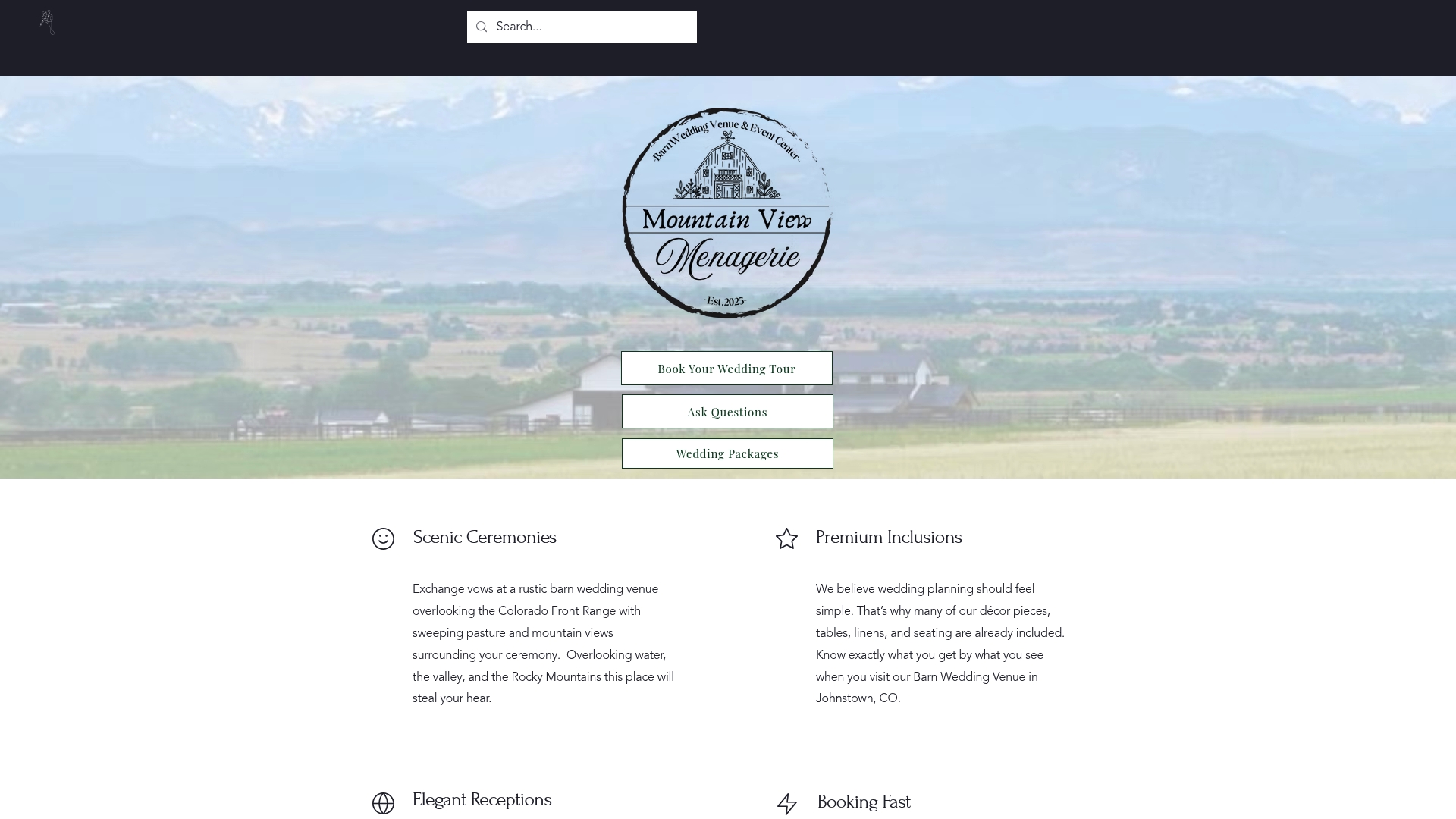
Our Wedding Packages include the tables, chairs, linens, and décor that make planning straightforward, so you can spend more energy thinking about your portrait timeline and less on logistics. If you’re ready to see how the light moves across our property, scheduling a tour lets you walk the grounds at the same time of day you’re picturing for your own portraits and confirm the view for your date firsthand.
FAQ
What is the golden hour for wedding photos?
Golden hour is the period shortly before sunset, roughly the 30 to 45 minutes leading up to it, when the sun sits low on the horizon and produces warm, soft, low-contrast light. This light flatters skin tones and reduces harsh shadows, making it the preferred window for romantic wedding portraits.
Is golden hour a good time to take pictures?
Yes, golden hour is widely considered one of the best times for portraits because the low sun angle creates soft, even lighting and a warm color cast that’s difficult to replicate with harsh midday sun or artificial light. It’s especially effective for backlit, romantic, and silhouette-style wedding portraits.
Is $4000 a lot for a wedding photographer?
Photography pricing varies widely by region, package, and hours of coverage, so whether a given price feels high depends on what’s included, such as engagement sessions, album design, or a second shooter. Couples are generally better served comparing quotes based on coverage hours and deliverables rather than price alone.
What is the best time for wedding photos?
The best time for most couples is during golden hour, the 30 to 45 minute window before sunset, since it offers the softest and most flattering natural light. Many couples build a first look earlier in the day to capture formal portraits in good light while still protecting a dedicated golden-hour slot for romantic couple’s photos.
Sources
Recommended
Comments