
Safe Farm Animal Weddings for US Couples at Mountain View Menagerie

Yes, you can absolutely include farm animals at a wedding, and couples are doing it in ways that feel both heartfelt and a little unexpected. Alpacas in bow ties, wandering goats, a beer-toting donkey, or a horse-drawn entrance can all add warmth and wonder to your day. The one catch: these moments take planning around safety, animal comfort, and coordination with your venue.
TL;DR:
Animals like alpacas and goats are well-suited for weddings due to their calm temperaments and ease with short, structured visits.
Horse entrances and photo sessions require experienced handlers, rehearsals, and safety plans to prevent unpredictable behavior or accidents.
Pricing for animal add-ons typically ranges from $500 to $900, including handlers, supplies, grooming, and liability insurance, with costs rising for travel and custom touches.
Proper planning with vendors involves asking about animal temperament, space needs, safety protocols, insurance, and emergency procedures to ensure a smooth experience.
Using animals as photo or ceremony highlights works best with scheduled, brief interactions to reduce stress, and with trained handlers monitoring animal behavior throughout.
Why couples are adding animals to their wedding day
Animals bring a kind of joy that’s hard to script. Guests light up when a goat wanders through cocktail hour or an alpaca poses for a selfie between courses, and those candid, giggly photos often become the ones everyone remembers. Beyond the charm factor, animals give guests something to talk about, breaking the ice between tables of relative strangers and giving kids (and more than a few adults) a reason to wander and mingle.
Couples are getting creative with how they weave animals into the celebration. A few favorites include:
A cocktail-hour petting zoo with goats, sheep, or rabbits for guests to enjoy before dinner.
A beverage burro that wanders the reception delivering drinks with a saddle full of charm.
An alpaca meet-and-greet, often dressed in bow ties or floral collars for photos.
A horse-drawn entrance or bridal portraits taken with a horse as a scene-stealing backdrop.
Each option lends a slightly different mood, from playful to romantic, so the best fit depends on the tone you’re setting for the day.
Which farm animals work best for weddings
Not every animal suits every role, and matching temperament to task makes the difference between a magical moment and a stressful one.
Alpacas and llamas tend to be calm and curious, which makes them a natural fit for mingling packages during cocktail hour or photo sessions. Most providers bring a handler, and the animals do well with short, structured visits.
Goats and sheep are playful and hands-on, perfect for a petting-zoo setup, but they need supervision around children and curious fingers near decorations or food.
Donkeys and beer burros work well as novelty servers or photo props. They need a trained handler and a contained path, since they can be food-motivated and easily distracted.
Horses deliver dramatic, romantic imagery for portraits or a ceremony entrance, but they require the most planning: experienced handlers, insurance, and a calm, controlled environment.
Pro Tip: Ask any animal provider about the specific temperament of the individual animals coming to your wedding, not just the species, since personality varies as much among goats and horses as it does among people.
When comparing options, weigh space needs (a horse needs far more room to stage than a goat), noise tolerance, and how much direct guest contact you want. A quieter alpaca visit might suit an intimate barn wedding, while a horse entrance fits a wedding with a big outdoor aisle and room to rehearse.
Keeping guests and animals safe on your wedding day
Animals add delight, but they also bring real responsibilities around health, safety, and welfare. The CDC’s guidance on animal exhibits offers a clear framework that applies just as well to weddings as it does to fairs and farms.
A statistic worth remembering: animals that appear perfectly healthy can still carry germs capable of making people sick, which is why the CDC recommends handwashing as the single most effective step after any contact.
A short planning sequence keeps both guests and animals comfortable, including designated animal areas away from food and drink, visible handwashing stations nearby, use of trained handlers aware of animal needs, ensuring animals have rest, shade, and water, and confirming necessary insurance and waivers with your vendor.

Horse entrances deserve extra caution. A real-wedding account from Michigan shows how stunning a horseback entrance can look, and also how unpredictable horses can be around flowing dresses, applause, or a crowd pressing in close. Rehearsing the route ahead of time with an experienced handler, and having a backup plan if the horse seems unsettled, turns a risky stunt into a safe, memorable moment.
What farm animal experiences typically cost
Pricing for wedding animal add-ons varies by species, group size, and how long the animals stay on-site. According to coverage of farms offering alpaca wedding packages, typical packages run from around $500 to $900 or more, depending on the number of animals and length of the visit.
That fee usually covers:
The handler’s time and travel to your venue.
Feeding supplies, leashes, or harnesses used during the visit.
Grooming or dress-up touches like bow ties, floral collars, or braided manes.
Liability insurance tied to the animal’s presence at your event.
A few factors tend to push costs higher: longer travel distances for the provider, multiple handlers for larger groups of animals, custom attire or props, and booking during peak wedding season when demand for animal vendors is highest. When comparing quotes, ask each provider directly about cancellation policies, who handles cleanup, and what their liability coverage includes, since these details vary widely between providers and are worth nailing down in writing.
Questions to ask before booking animal add-ons
A short list of questions during your venue tour or vendor call can save you from surprises later.
Where exactly will the animals be kept, and how far is that from food and seating areas?
What is the venue’s cleaning policy for animal areas after the event?
Does the vendor carry proof of insurance, and can they share recent health or vaccination records?
What credentials or experience does the handler bring to events like yours?
What is the emergency plan if an animal becomes stressed or unwell mid-event?
What are the arrival and departure times, and how will guest access be supervised?
Does the contract address cleanup responsibilities, a replacement animal if needed, liability language, and a weather contingency?
Getting clear answers in writing before you sign protects your day and keeps the experience enjoyable rather than stressful for everyone involved, animals included.
Mountain View Menagerie: a barn venue built with animal experiences in mind
Mountain View Menagerie is a rustic barn wedding venue in Johnstown, Colorado, set against sweeping views of the Rocky Mountains. The venue includes decorations and seating as part of its packages, with customizable indoor and outdoor ceremony options to suit your style. For couples drawn to the idea of animals as part of the celebration, Mountain View Menagerie offers add-ons like a beer burro experience alongside other animal experiences.
If an animal-filled wedding sounds like your vision, the next step is simple: browse the venue’s gallery for a feel of the space, then ask directly about which animal add-ons are currently offered and how they fit into your timeline. Confirming specifics with the venue itself, rather than assuming, ensures your plans match what’s actually available.
How animals fit into the ceremony and photos
Animals tend to play one of two roles on a wedding day: a supporting cast member during the ceremony, or a star of the photo session. A horse-drawn entrance can carry a bride down the aisle with unmistakable romance, while a leashed goat or alpaca walking alongside the wedding party adds a lighthearted, unexpected touch.
For photos, many couples schedule a dedicated window, often right after the ceremony or during cocktail hour, for portraits with the animals. This keeps the animal’s time on-site focused and reduces stress compared to having them present for the entire event. Alpacas dressed in bow ties or floral collars make for playful, shareable images, while horses tend to anchor more formal, cinematic portraits against open fields or barn doors.

Timing matters as much as styling. Golden hour light flatters both the couple and the animal, and scheduling photos before guests arrive in large numbers keeps the animal calmer and the scene less chaotic. Coordinating with your florist on any floral accents for the animal, braided manes, collars, or garlands, adds a cohesive look without adding stress to the animal itself, as showcased by Luxury Wedding Flowers Newport Beach & Orange County.
Whether animals appear in the ceremony or only in photos, the goal is the same: a few genuine, unscripted moments that reflect the personality of your day rather than a forced photo op.
Reading animal behavior and working with handlers
Animals communicate discomfort long before anything goes wrong, and a good handler knows the signs to watch. Pinned ears, stomping, sudden pacing, or a shift away from the crowd all signal that an animal needs space or a break. This is exactly why a trained handler stays with the animals throughout their time at your wedding rather than leaving them unsupervised with guests.

Calm, predictable environments bring out calmer behavior. Reporting on alpaca wedding experiences notes that animals given shade, rest, and a quieter staging area tend to interact more naturally with guests, which in turn makes for a smoother, more enjoyable experience for everyone. Loud music, sudden applause, or a crush of guests reaching in at once can unsettle even a well-socialized animal.
For horses especially, rehearsal matters. A real account of a bride riding her horse down the aisle shows both the payoff and the risk: gorgeous, unforgettable imagery paired with a reminder that horses need time to adjust to dresses, veils, and crowd noise before the actual event. A short rehearsal in the same setting, with the same fabric the bride will wear, helps the animal get comfortable ahead of time.
Trusting the handler’s judgment on the day itself, even if it means shortening a photo session or skipping a planned moment, keeps both people and animals safe.
Bringing your animal-inspired wedding to Mountain View Menagerie
If you’re picturing a wedding day with rustic charm, mountain views, and a little bit of farmyard magic, Mountain View Menagerie was built with exactly that vision in mind. As a family-owned venue in Johnstown, Colorado, it hosts only one wedding per day, so your celebration gets the full property and the team’s full attention rather than sharing the space with another event.
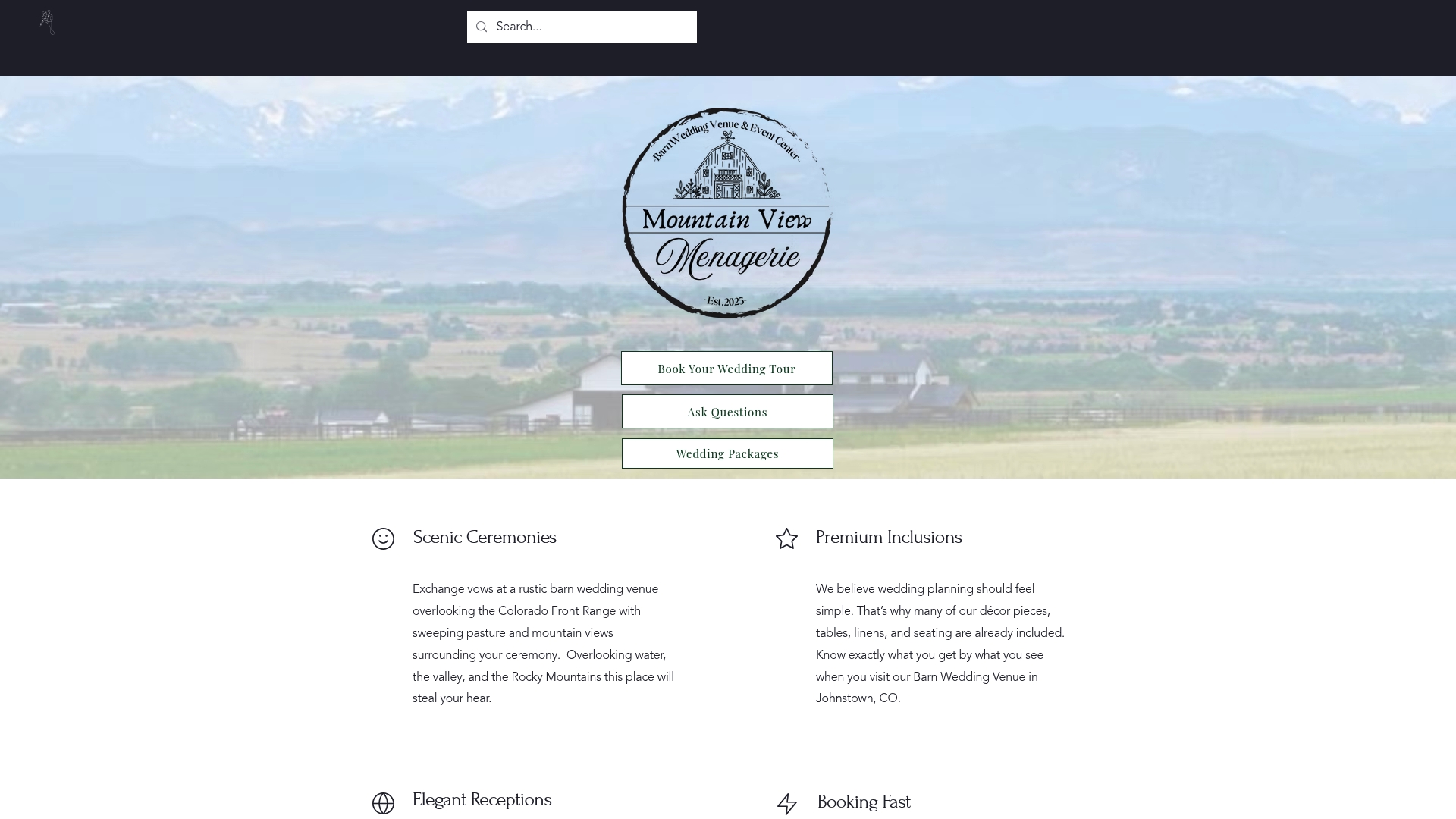
Packages often include tables, chairs, linens, and decor as a starting foundation, with add-ons like animal experiences available to match your vision. If a goat wandering through cocktail hour or an alpaca photo session sounds like the kind of memory you want guests talking about for years, the wedding packages page is the place to see what’s included and start the conversation about your date.
Sources
Guidance here draws on CDC recommendations for animal exhibits, historical MMWR findings on animal-contact settings, and real wedding accounts illustrating both the rewards and risks of including animals in a celebration.
FAQ
How much does a farm wedding cost?
Costs vary widely depending on the venue, guest count, and any animal add-ons you choose. Animal experiences specifically, like alpaca visits or a beverage burro, often run $500 to $900 or more depending on the package and provider.
What is the rarest month to get married?
Wedding popularity shifts by region and season, with colder winter months generally seeing fewer bookings than spring and fall. If you’re hoping for a quieter, more available booking window, asking your venue directly about their slower months is the most reliable way to find out.
Is $5,000 a reasonable budget for a wedding?
A budget that size can work well for smaller, more intimate celebrations, especially when the venue includes decorations, seating, and other essentials in its packages. Reaching out directly for current package details is the best way to see what fits within that range.
Is $10,000 a lot for a wedding venue?
Venue costs vary significantly based on location, included amenities, and guest capacity, so what counts as high or reasonable depends on what’s bundled into the price. Checking a venue’s specific package inclusions, like included decor, seating, and add-ons, gives you a clearer sense of overall value than the price tag alone.
Is it safe to have animals interact with wedding guests?
Animal interactions are generally safe when venues follow basic precautions like designated animal areas, accessible handwashing stations, and trained handlers, as outlined in CDC guidance for animal exhibits. Supervising children closely and keeping animals away from food service areas further reduces the risk of illness.
Recommended
Comments