
Open vs Cash Bar: $35–$70 Per Guest for Northern Colorado Couples
For most couples, a limited or hybrid bar is the smartest default: it delivers the warmth and generosity of an open bar without the full open-bar bill. A cash bar saves the most money but can feel transactional if guests aren’t warned in advance. The right choice comes down to your budget priorities, guest mix, and how you plan to communicate the setup before the big day.
TL;DR:
Full open bars generally cost $35 to $70 per guest for a five-hour reception, while limited bars range from $18 to $35 per guest; cash bars involve minimal upfront costs but charge guests per drink.
Longer receptions, outdoor venues, and multi-generational guest lists favor hybrid setups, such as time-limited open bars or serving beer and wine only, to balance cost and guest experience.
Vendors often bill through flat packages, consumption, or hourly fees, so couples must clarify pricing models to avoid hidden expenses like minimums or venue Markups.
Guests are more comfortable with full open bars, especially at formal or evening events, whereas cash bars may cause friction, notably among older or out-of-town visitors.
Signage is crucial for clear communication about bar type, and planning should align with guest demographics, reception duration, and venue licensing requirements to stay within budget.
Table of Contents
Open Bar vs. Cash Bar: Defining Your Options
Before comparing costs, it helps to know exactly what you’re paying for. Vendors use different billing models, and the terminology gets murky fast.
A full open bar means every drink is covered by the couple, either through a flat per-person package or consumption billing, where you pay for actual drinks poured. A hosted or limited bar narrows the selection, often to beer and wine, a signature cocktail or two, or an open bar restricted to a set window (say, the first two hours of the reception). A cash bar flips the model: guests pay per drink out of pocket, though the host may still cover setup fees, bartender wages, or a base liquor package behind the scenes.
The mechanics matter as much as the label. A general explainer on bar structures lays out the pros and cons of each format from a vendor’s perspective, which is worth reviewing before you sign a catering contract.
Before locking in any option, confirm two things with your venue:
Whether the property holds its own liquor license or requires a licensed third-party bartending service
Whether corkage fees apply if you’re bringing in outside alcohol
Open Bar vs. Cash Bar Pricing: Real Numbers for Your Budget
Cost is usually the deciding factor, and the range is wider than most couples expect. A full open bar for a five-hour reception typically runs $35 to $70 per guest, while a limited bar (beer, wine, one or two cocktails) drops to $18 to $35 per guest. A cash bar costs the couple little beyond setup, though bartender fees and a base stock still apply.
Vendors bill three main ways: a flat per-person package, consumption billing (you pay for what’s actually poured), or an hourly bartender fee layered on top of a smaller liquor minimum. Ask which model your caterer uses before comparing quotes, since a “cheaper” per-person rate can hide a steep consumption tab.
Here’s how the numbers stack up across three common guest counts:
Guest Count | Full Open Bar | Limited Bar (Beer & Wine) | Cash Bar (Host Setup Only) |
100 guests | $2,625–$5,250 | $1,350–$2,625 | $250–$500 setup |
100 guests | $3,500–$7,000 | $1,800–$3,500 | $300–$600 setup |
150 guests | $4,375–$8,750 | $2,250–$4,375 | $350–$700 setup |
For a mid-size wedding, sample totals from WeddingTipCalculator show a premium open bar for 100 guests landing between $5,000 and $8,000, while a beer-and-wine open bar for the same group falls to $1,500 to $3,000. Cash bars keep host costs near zero, but guests then pay $5 to $15 per drink out of their own wallets. Every one of these figures shifts with your region, spirit tier, and reception length, so treat them as planning benchmarks rather than a final invoice.
How Bar Choice Shapes Your Reception’s Atmosphere
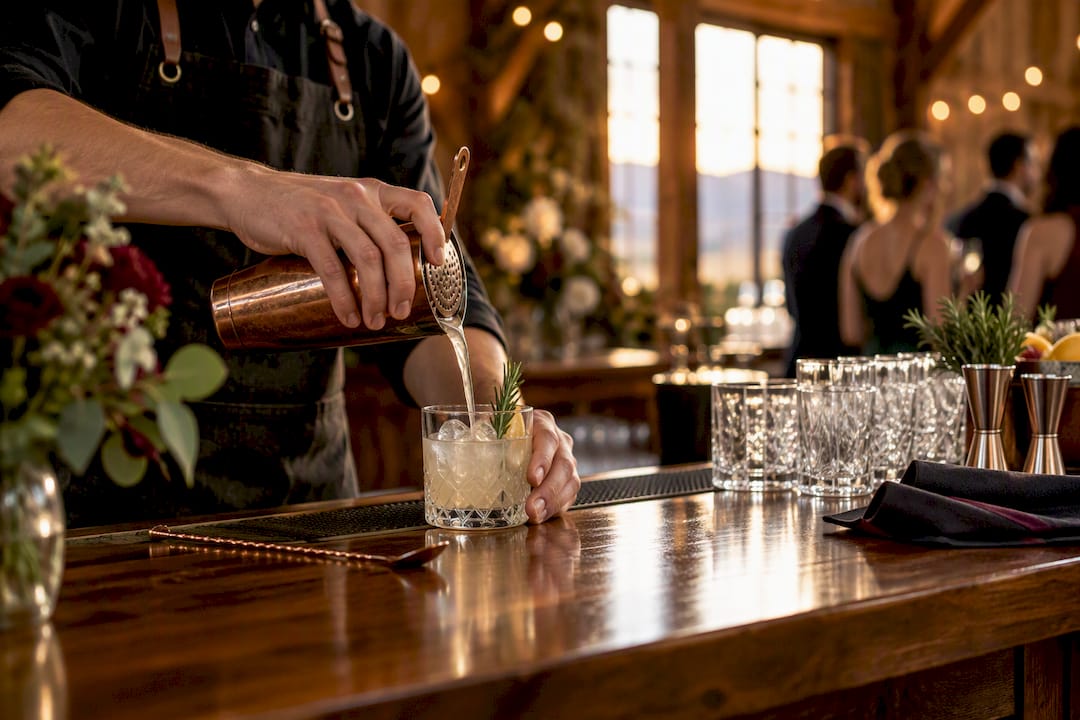
The bar you choose changes how your reception feels, not just what it costs. Open bars keep the social energy moving. Guests refill drinks without a second thought, lines stay shorter because there’s no fumbling for cash or cards, and the whole evening reads as generous.
Cash bars introduce friction. Guests hunt for an ATM, decide whether a second round is worth the money, and the transactional moment can clash with the celebratory mood, especially at formal or evening receptions. Planner Camille Plummer, quoted by The Knot, notes that couples increasingly choose open or limited bars specifically so guests never have to think about cash at all.
A few patterns show up consistently:
Older guests and out-of-town relatives tend to notice a cash bar more than younger crowds
Formal, seated receptions feel more jarring with a cash bar than casual or outdoor events
Hybrid setups (open for part of the night, cash after) soften the transition if timed with toasts or dinner service
On tipping, bartenders working hosted events typically receive $50 to $100 each as an end-of-night gratuity, on top of any per-drink tips collected during a cash bar. Nearly 57% of couples go with a full open bar specifically to avoid the awkwardness a cash setup can create.
Hybrid Bar Options That Cut Costs Without Cutting the Fun
Hybrids exist because most couples don’t need every guest drinking top-shelf whiskey for five straight hours. A well-built limited package can capture roughly 80% of the guest-experience benefit of a full open bar at about half the cost.
Time-limited open bar. Host a full open bar during cocktail hour and dinner, then switch to cash or close the bar during dancing.
Beer and wine only. Skip liquor entirely and offer a curated selection, which trims per-guest cost significantly compared to a full spirits list.
Ticketed drinks. Give each guest two or three drink tickets, then shift to cash bar once they’re used.
Hybrids work best with longer receptions, mixed-age guest lists, or budgets that can’t stretch to a full open bar but still want to avoid the cash-bar feel entirely.
Pro Tip: Post clear signage at the bar itself, not just on your wedding website. Guests read signage in the moment; they rarely reread your invitation once they’re holding a drink order.
Choosing the Right Bar Setup: A Decision Checklist
Start with your guest profile and budget priorities before touching vendor contracts. A younger, casual crowd tolerates a cash bar far better than a multigenerational guest list expecting full hospitality.
Run through this checklist during vendor calls:
How many guests are attending, and what’s their typical drinking pace?
Is the reception three hours or six? Longer events favor hybrid models over a full open bar.
Does the venue require a licensed bartending service, and does that cost stack on top of the liquor bill?
What does your alcohol liability coverage require in terms of guest caps or service hours?
Ask every vendor these questions before signing anything:
Is pricing per-person, consumption-based, or a combination?
What’s included in the bartender fee, and is there a guest minimum?
Are taxes and service charges added separately, or built into the quote?
Does the venue mark up liquor if you’re required to buy through them exclusively?
Watch for vague minimums, unclear service fees, and venues that quietly require you to purchase alcohol through an in-house markup rather than your own supplier. Those hidden costs are where open bar budgets quietly balloon past what couples expect.
A Barn Venue’s View on Bar Logistics
Barn weddings add a layer most couples don’t think about until the tasting appointment: outdoor flow. At Mountain View Menagerie, beverage service has to account for covered gathering areas, weather contingencies, and secure storage for opened bottles between the ceremony and reception.
Capacity matters too. With limited indoor capacity and flexible outdoor space, staffing and alcohol licensing can be simpler to plan than at larger venues. Couples exploring wedding packages often ask how bar service fits alongside included tables, linens, and decor, and the honest answer is that a rustic setting doesn’t limit your bar options. It just means service timing and guest movement deserve a little extra planning during your walkthrough.
— Kimberly
Plan Your Bar Setup With Mountain View Menagerie
An exclusive-use wedding venue gives you private access for your date, which means no shared bar lines, no competing events, and full flexibility to design the beverage experience around your guest list and budget. Our Wedding Packages include tables, chairs, linens, and decor as a starting foundation, and our team can walk you through how open, limited, or cash bar setups fit your reception timeline.
If you want something memorable beyond the standard bar cart, the Beer Burro Experience brings a genuinely unique cocktail-hour moment to your barn wedding, one your guests will still be talking about at brunch the next morning. To plan your event, consider scheduling a tour and getting a quote, as well as discussing bar setups, guest counts, and budget priorities to find the right choice for your celebration.
Sources
Cost ranges and hybrid examples come from WeddingTipCalculator and Pix Wedding. Guest-expectation and etiquette data come from The Knot. Prices vary by region and vendor, so always confirm final numbers with your own caterer or venue.
FAQ
What Are the Three Types of Wedding Bars?
The three main types are full open bar, hosted or limited bar (often beer and wine or a signature cocktail list), and cash bar, where guests pay per drink. Many couples now choose a hybrid that blends two of these across the reception timeline.
What Does an Open Bar Mean at a Wedding?
An open bar means the couple covers every drink guests order, either through a flat per-person package or consumption billing based on what’s actually poured. Full open bars for a five-hour reception typically run $35 to $70 per guest.
Is a Cash Bar Tacky or Acceptable at a Wedding?
A cash bar is generally acceptable as long as guests know about it ahead of time, ideally noted on your wedding website or invitation details. Unannounced cash bars tend to catch guests off guard and can feel less hospitable than a communicated one.
Who Typically Pays for an Open Bar?
The couple or hosting family covers the cost of a full open bar, usually as part of the overall catering or venue contract. At Mountain View Menagerie, beverage service can be built into your wedding package alongside other included amenities, with add-ons like the Beer Burro Experience available for a distinctive touch.
Recommended
Comments