
4 Copyable Wedding Ceremony Timelines Plus Barn Wedding Timing Tips

Most wedding ceremonies run 15 to 30 minutes, and that range covers everything from the welcome to the final kiss. Courthouse and elopement ceremonies wrap up in 5 to 15 minutes, while religious ceremonies commonly stretch to 30 to 60 minutes or longer. If you want time for cocktail hour and portraits, plan roughly 20 to 30 minutes for the ceremony itself, plus another 20 to 30 minutes for photos unless you’re doing a first look. Dip below 10 minutes and guests may feel shortchanged; push past 60 without ritual to justify it, and attention starts to wander.
TL;DR:
Elopements or courthouse ceremonies typically last 5 to 10 minutes, while religious ceremonies can extend beyond 30 minutes due to additional rituals.
Including more readings, vows, or rituals can lengthen a ceremony to 35 or 45 minutes, especially with a large wedding party or long processional.
To keep ceremonies within 20 to 30 minutes, limit readings, streamline the processional, and keep officiant remarks under three minutes.
A 4 p.m. ceremony ending around 4:30 p.m. allows 20 to 30 minutes for portraits with a first look, or longer if portraits are after the ceremony.
Running a rehearsal with a stopwatch and marking song lengths helps ensure the ceremony stays within the planned time frame.
Table of Contents
What Is the Average Wedding Ceremony Duration?
Ceremony length depends almost entirely on what you build into the script. Once you know your format, you can map the pieces and get a realistic number.
Elopement or courthouse: 5 to 10 minutes. Legal declaration, brief vows, pronouncement. Nothing extra.
Civil or short secular ceremony: 10 to 20 minutes. A welcome, one reading, vows, rings, and the pronouncement.
Standard secular ceremony: 20 to 30 minutes. This is where most couples land, with a welcome, one or two readings, vows, a ring exchange, and a short address from the officiant.
Religious ceremony: 30 to 60-plus minutes. Hymns, prayers, a sermon, and specific rituals add real time, and some traditions require an hour or more by design.
The rule of thumb worth remembering: pick your range first, then slot elements into it. Time each piece during rehearsal instead of guessing, because guesswork is exactly where ceremonies run long.
How Long Does Each Part of the Ceremony Take?
A ceremony is really a sequence of small moments stacked together, and each one has a fairly predictable length. Here’s how the minutes typically break down.
Ceremony element | Typical time |
Processional | 5 to 10 minutes |
Welcome and opening remarks | 1 to 3 minutes |
Each reading | 2 to 4 minutes |
Personal vows | 2 to 3 minutes per person |
Ring exchange | 1 to 2 minutes |
Unity ritual | 3 to 5 minutes |
Pronouncement | 1 minute |
Recessional | 1 to 3 minutes |
A large wedding party or a long aisle stretches your processional timing beyond the low end of that range, sometimes by two to five extra minutes. Choose processional and recessional music that runs slightly longer than your actual walk, so nobody hits a dead silence halfway down the aisle. A ceremony that piles on two readings, personal vows, and a unity ritual can climb to 35 or 45 minutes without anyone intending it to.
How Can You Shorten or Lengthen a Wedding Ceremony?

Every element you add or cut moves the clock, and knowing which ones matter most lets you hit your target time without losing what makes the ceremony feel like yours.
To trim time:
Limit readings to zero or one instead of two or three.
Use officiant-prompted vows (“Do you take…”) instead of fully personal vows.
Skip the unity ritual entirely, or save it for the reception.
Keep officiant remarks under three minutes.
Streamline the processional order, fewer pauses, fewer separate entrances.
To add meaningful minutes:
Include one reading or a short musical performance.
Add a unity ritual, with a brief explanation so guests understand its significance.
Let each partner deliver a personal vow running two to three minutes.
Loop your officiant in early. They’ve seen which moments tend to run long and which ones couples usually regret cutting, and a full-pace rehearsal will confirm your real number before the wedding day arrives.
Sample Wedding Ceremony Timelines You Can Use
Pick the format closest to your plans and adjust the minutes to fit your script.
Elopement or courthouse (5 to 10 minutes): Officiant welcome (30 seconds), legal declaration (1 minute), vows (2 minutes), ring exchange (1 minute), pronouncement and kiss (1 minute).
Short civil or secular (10 to 20 minutes): Processional (3 minutes), welcome (2 minutes), one reading (3 minutes), vows (4 minutes), rings (2 minutes), pronouncement (1 minute), recessional (2 minutes).
Standard secular (20 to 30 minutes): Processional (5 minutes), welcome (2 minutes), two readings (6 minutes), officiant remarks (2 minutes), vows (5 minutes), rings (2 minutes), pronouncement (1 minute), recessional (3 minutes).
Religious or full-mass (30 to 60-plus minutes): Processional, opening prayers, scripture readings, a homily or sermon, vows, rings, communion or additional rites, and a closing blessing. Timing here varies by faith tradition, so consult your clergy for the exact sequence and required minutes.
How Does the Ceremony Time Affect Photos and Cocktail Hour?
A 4 p.m. ceremony start is one of the most common choices, and it’s worth understanding how photography decisions shift everything that follows.
With a first look, couples typically free up 20 to 30 minutes of portrait time before the ceremony, which means they can walk straight into cocktail hour right after the recessional.
Without a first look, plan on 20 to 40 minutes of portraits after the ceremony ends, which often delays the couple’s entrance to their own cocktail hour.
Example: a 4 p.m. ceremony ending around 4:30 p.m., followed by 30 minutes of couple and family portraits, pushes reception doors back by roughly 20 minutes compared to a first-look schedule.
Neither approach is wrong, but your photographer and coordinator need to know which one you’re choosing well before the wedding day.
Rehearsal Checklist to Confirm Your Ceremony Length
Run this list at your rehearsal, not the week before.
Walk the full script at real pace, including pauses, not a rushed version.
Time it with a stopwatch, start to finish.
Mark exact processional and recessional song lengths on your printed program.
Assign one person as timekeeper for the actual day.
Build a 5 to 10 minute buffer between the ceremony’s end and cocktail hour’s start.
Pro Tip: Have each partner read their vows aloud, out loud, at rehearsal, not just in their head. Speaking is slower than reading silently, and a 200 to 300 word vow typically runs two to three minutes once you add pauses for emotion.
A Barn Venue’s Take on Ceremony Timing
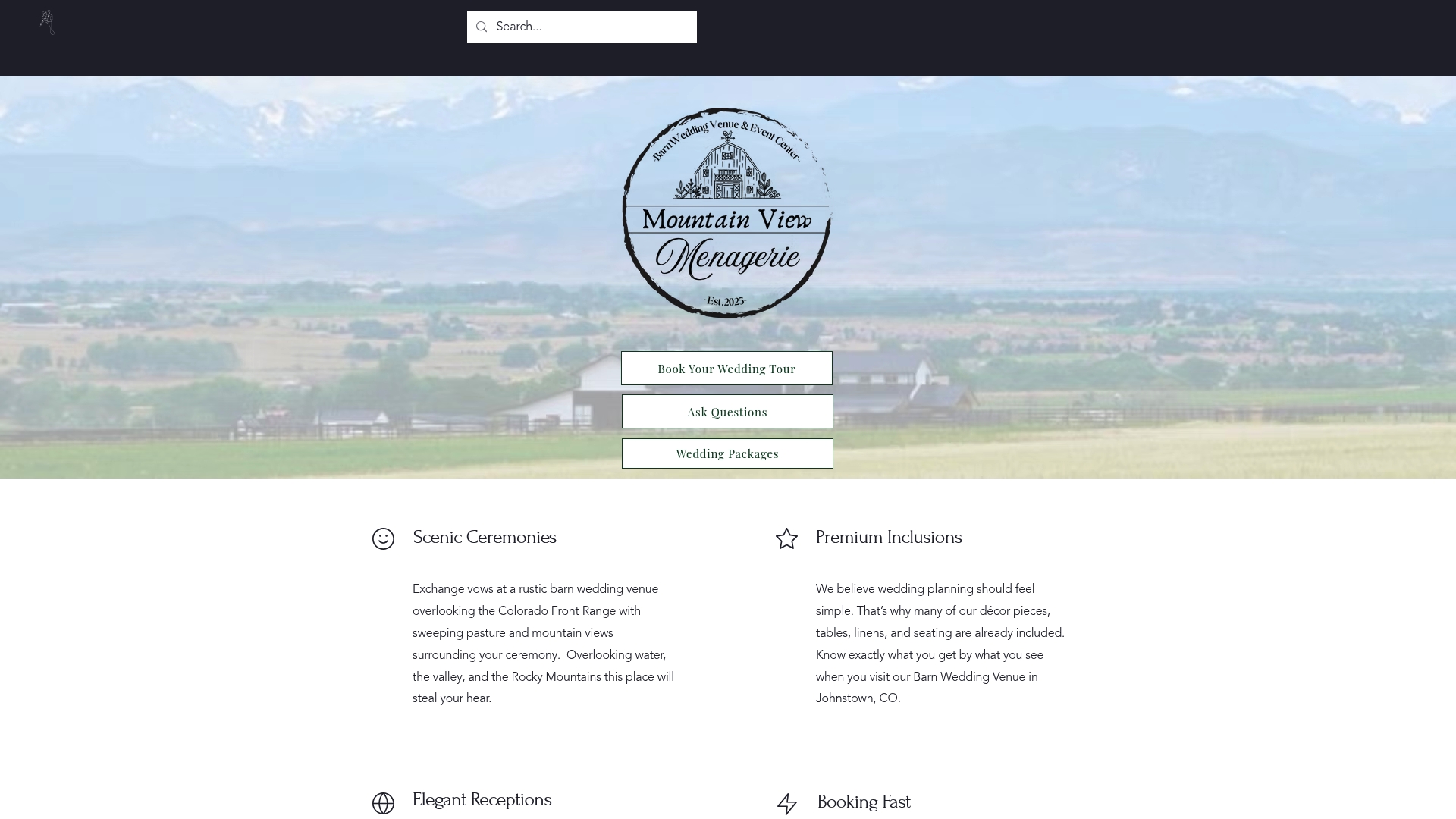
At Mountain View Menagerie, we’ve found 4 to 5 p.m. ceremonies work beautifully for barn weddings. The light softens, guests stay comfortable, and photographers get that golden hour glow against the Rockies. Our team helps couples map their timeline with recommended vendors, so reach out for a timing consult specific to our property.
— Kimberly
Ready to Plan Your Ceremony Timeline at Mountain View Menagerie
Mountain View Menagerie is the alternative to piecing together a venue, rentals, and a coordinator separately. We host one wedding per day in Johnstown, Colorado, so your ceremony timeline never competes with another couple’s schedule on the same property. Our Wedding Packages include tables, chairs, linens, and décor already built in, plus a bridal suite and groom’s lounge that keep your rehearsal and getting-ready timing simple instead of scattered across vendors.
Couples who want a unique touch can add the Beer Burro Experience during cocktail hour, timed right alongside your portrait window. If you’re mapping out a ceremony start time against sunset, mountain light, and your photographer’s schedule, our team can walk through it with you against real dates. Reach out to check availability and book a timing consultation for your Northern Colorado wedding.
Sources
This guide draws on planner and publisher timing data from Brides, The Knot, Plan A Wedding, and VowsForge. For ritual-specific timing, consult your officiant or clergy directly.
FAQ
What Is a Good Length for a Wedding Ceremony?
Most couples aim for 15 to 30 minutes, which covers a welcome, vows, ring exchange, and pronouncement without dragging. Religious ceremonies commonly run 30 to 60-plus minutes because of added prayers, hymns, and rituals.
Is a 20-Minute Ceremony Too Short?
No, 20 minutes falls squarely in the standard secular range and is not too short for most guests. A ceremony this length usually still fits a reading, vows, and a ring exchange comfortably.
What Is the 30 5 Minute Rule for Weddings?
This isn’t a standardized industry rule, and definitions vary depending on who you ask. If you’ve seen it referenced elsewhere, treat it as informal advice rather than a fixed timing standard, and build your schedule around the element by element ranges covered above instead.
What Is the 50 20 30 Rule for Weddings?
Like the 30/5 guideline, this isn’t a recognized timing standard within the wedding industry. Some couples use informal ratios to split ceremony, cocktail hour, and reception time, but there’s no single agreed definition, so a custom timeline built from your own priorities will serve you better.
Recommended
Comments